
Let’s talk about the marketing funnel. Yes, that thing everyone says you have to have but rarely explains what it is in a way that makes sense. You have probably seen it in pitch decks or heard it tossed around in marketing meetings like it is the end-all-be-all of your business growth. But what does it all really mean for your business? And more importantly, do you actually need a marketing funnel or is it just another overhyped marketing concept an agency is trying to sell you on?
At Stoke Marketing, we are not here to sell you on gimmicks. Whether you are a small business owner trying to get more consistent leads or a CMO who needs a refresh on the marketing funnel, this blog will tell you what to do with this whole “funnel thing”.
What is a Marketing Funnel, Really?
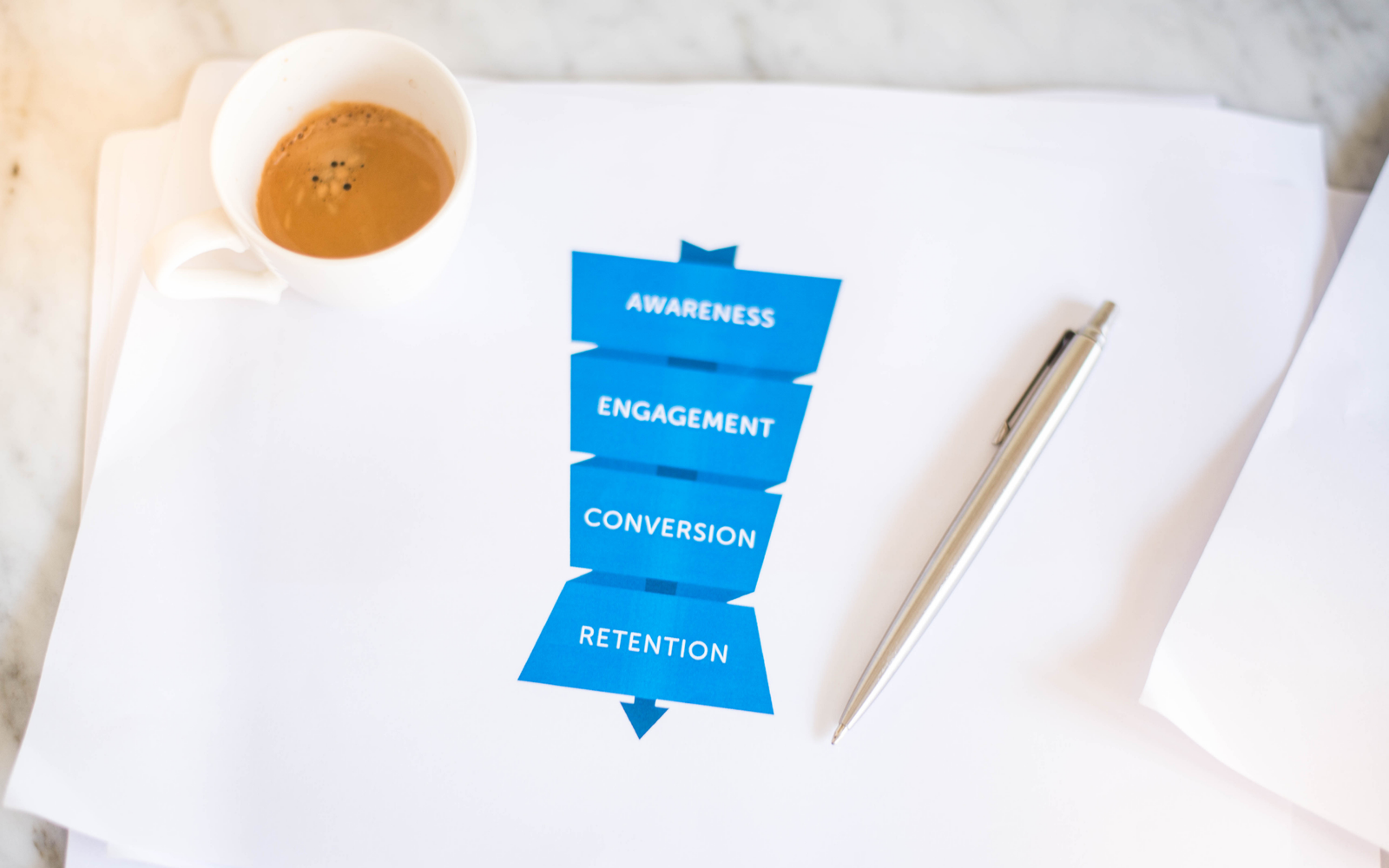
Imagine you’re dating. First, you meet someone (awareness), then you go on a few dates and get to know each other (consideration), and finally, if all goes well, you commit (conversion). The marketing funnel is kind of like that. It is a framework used to guide potential customers through stages of awareness, interest, and decision-making, all the way to becoming loyal customers or clients.
The idea is to understand what your audience needs at each stage so you can serve them the right message, at the right time, in the right place. Whether you are selling a product, a service, or building a community, the funnel is your roadmap for moving people from “just browsing” or “I am not interested” to “take my money now” and “I trust them to get the job done”.
Breaking Down the Stages, No MBA Required.
Time to decode, one stage at a time. The marketing funnel has three core sections: top of funnel, middle of funnel, and bottom of funnel. Let’s walk through each one:
- Top of Funnel: Awareness
This is the first stage where you catch someone’s attention. They may have discovered your blog through Google search organically, saw your Instagram reel while mindlessly scrolling at 10:19 pm, or heard your name in a podcast episode and decided to do a little research. They do not know you yet, but they are intrigued and ready to learn more. The goal? Get them to stick around and pique their interest. - Middle of Funnel: Consideration
Now that you have their attention, it is time to build trust. This is where you showcase your expertise, share social proof, and offer resources that help them evaluate their options. Think case studies that prove results, lead magnets like downloadable quizzes or guides, email sequences that educate, and webinars that invite deeper conversations. In today’s landscape, influencer partnerships are taking flight with product comparison videos and user-generated content (UGC), which also play a huge role in credibility. The goal at this stage is simple: give people the confidence in your business they need to keep moving forward. - Bottom of Funnel: Conversion
At this point, you have sold them on your idea. Make it easy for them to take action. This is where you drive decisions by providing product demos, scheduling discovery calls, and highlighting offers that remove any remaining hesitation. And if you are really honed in on your process as a business, this is where loyalty or referrals begin.
Funnels: Must-Have or Marketing Myth?
Do you need a funnel? The short answer is yes. The longer answer is no matter the size of your business, having a basic funnel at the least is key to consistent growth. If you are relying on word-of-mouth or random social media posts to get the job done, you are leaving money on the table. A funnel gives you and your team structure to your marketing efforts, helping you track performance and turning strangers into paying customers without guessing what comes next.
How complex your funnel is may vary depending on the type of business and how established it is. A service-based business may only need a few touchpoints compared to an e-commerce brand that requires many different nurturing steps to be successful. The main takeaway is making sure you have a path and that it works.
Ready to stop guessing and start growing? Let’s build a funnel that works.
Signs You Funnel-ly Need Some Help.
If your funnel is not working, your business probably feels like it’s spinning its wheels. You do not have to be a data scientist to know when something is off, you just have to be in tune with your business. Here are a few red flags:
- A high number of website visitors but no contact form submissions or sales
- Lots of engagement on social media but no conversions
- Leads that ghost you after an email
- Team members who are confused what the next step is
If you recognize one or more of these, it may be a sign that either your funnel has gaps in it or you have not built one at all. A successful funnel not only generates clicks but also creates momentum, builds trust, and drives predictable results. If every sale feels like a shot in the dark, it is time to tighten your system.
Crafting a Funnel that Converts.
Building a marketing funnel does not have to be intimidating. At Stoke, we craft journeys that align with your audience, voice, and growth goals. Our approach focuses on clarity and what actually moves the needle:
- Know Your Audience
Who are they, what do they care about, and what keeps them from purchasing? If you are not sure, time to dig into your data, customer feedback, and research if necessary. - Map the Journey
Write out the steps your customer or client takes from the very first contact to the final sale or conversation. Identify your friction points, gaps, and any messaging mishaps. - Create Content That Fits
Throwing everything but the kitchen sink at your prospect at their first point of contact is a deterrent, and it is quite frankly not attractive. Offer helpful content at the top, helpful insights in the middle, and compelling CTAs at the bottom of the funnel. - Use Data for Precision
Keep an eye on how your funnel is performing through tools like Google Analytics, HubSpot, or heatmaps on your website to follow your customer’s buying behavior. This is the time to identify what is working and what is not. - Fine Tune as You Grow
As your business grows, your funnel should evolve. Seasonal campaigns, audience updates, or new offers will affect your approach.
Not sure where to start? Get in touch with Stoke.
AI’s Role in Today’s Funnel Strategies
Artificial intelligence is actively changing how a majority of our world functions. AI is influencing how marketing funnels are built, optimized, and scaled. From targeting various audiences to personalizing content, AI tools are helping marketers and business owners turn data into smarter decisions and more productive workflows.
A recent article published by Demand Gen Report highlights that AI is playing an increasing role in streamlining every stage of the funnel, from lead scoring and segmentation at the top, to dynamic content recommendations in the middle, and predictive analytics to drive conversions at the bottom.
Here is where AI is making an impact:
- Smarter Segmentation: AI tools can analyze data to create more refined audience segmentation. This means that your efforts at the top of your funnel reach the right people faster.
- Content Personalization: Instead of sending out email blasts with the same content to every single audience type, AI enables you to customize email content, landing pages, and even ads based on user behavior and what stage of the funnel it is for.
- Predictive Lead Scoring: No more guessing which leads are ready to purchase. AI can determine this based on historical patterns and real-time engagement.
- Faster Testing: From subject lines to CTAs, AI can help you automate A/B testing so you can continue improving what is working, and tossing what is not.
AI won’t replace your funnel, but it can help you refine it. When used appropriately with strategy and intention, it’s like adding fuel to your marketing engine that’s on fire.
Want to dive deeper into how AI can elevate your marketing? Check out our recent blog: AI Without the Noise: Creating Original, Impactful Content in 2025
Funnels Don’t Sell, Strategy Does
At the end of the day, a funnel is just a tool. The power comes from the strategy that drives it.
If your funnel is not working, it’s likely because it was not built with the right insights, messaging, or structure behind it. That’s where we come in.
Stoke partners with businesses that have a growth mindset to build intentional marketing systems that actually work. Whether you are starting from scratch or refining what you have already poured hours of your time into, our team brings the expertise to help you build with confidence.
Together, let’s build a marketing funnel that works. Get started
References:
Demand Gen Report. AI’s Role In Optimizing The Marketing Funnel. https://www.demandgenreport.com/demanding-views/ais-role-in-optimizing-the-marketing-funnel/49075/